
Captive Critter coming soon: the Stone Crab

Updated: Sep 18, 2025

This past spring, LOC member Mark Soderberg purchased seed from us for his oyster gardening hobby. During a late summer visit to his oyster float to check on his young oysters, he found two crabs that had made their home in the seed bag and had crushed and eaten every single seed (about 1000). The seed was inside a grow-out bag with very small openings, yet the crabs managed to enter when they were small. As they grew, they became increasingly larger, lethal and ravenous and caught inside the bag.


As it turned out and ultimately verified by VMRC, the captives were mud crabs, native to our waters. However, because they were so large, the original theory was that they were juvenile stone crabs and this theory coincided with two recent articles on the documented presence of stone crabs in the Chesapeake Bay.
Because stone crabs feed on oysters and mussels, which are key species in restoration and aquaculture industries, there is concern about the potential ecological and economic impacts if the stone crab population becomes well established in the lower Chesapeake Bay.
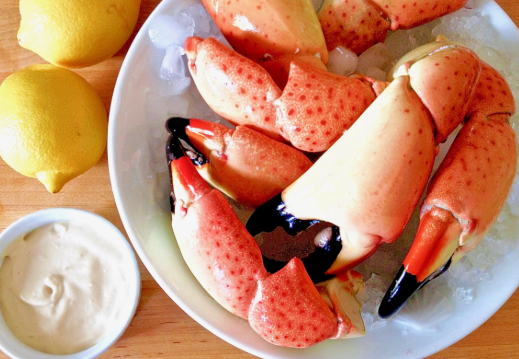
While stone crabs can be an annoying bycatch for oyster growers and crabbers, they are also a seafood delicacy. 98% of stone crabs come from Florida, and the $90 cost per pound for large claws is such that a modest serving at a restaurant costs about $40, second only to king crab legs.
Claws are harvested from the crab without causing mortal harm to the crab. If both claws meet size requirements, both can be harvested. However, sometimes only one claw might be harvestable. In either case, the crab is released back into the water after the claws have been harvested. The crab will shift its diet to algae and worms and will regenerate new claws during their next molting. Because of this, the industry quickly claims it is sustainable. However, some industry watch groups note that while stone crabs can grow new claws in optimal conditions, the actual mortality due to industry harvests is hard to determine.
In December 2024, we reported on warming water trends, it sounds as if stone crabs are here to stay in the lower Chesapeake Bay. Time will tell if their populations start to impact our local species and industries.
In the past, storms would occasionally bring stone crab larvae to the Chesapeake Bay. However, these transplants could not survive the cold winter waters. With water warming trends, stone crab sightings are increasing, and the stone crab might be one of several species migrating north.
The stone crab is not the only southern transplant we have found in the Lynnhaven. Check out our captive critter post about the Spotfin Butterfly Fish.


Comments